
Opportunities in Kenya’s small-scale Horticulture sector

Swasti Impact Consulting has years of experience in conducting value chain analysis for several countries globally. The value chain analysis provides crucial information about the performance, challenges, and opportunities in the value chains of a country. We collaborated with the World Bank to conduct a value chain analysis of 10 value chains in Kenya. Through rigorous secondary research, we successfully evaluated the performance of the key value chains and identified the opportunities in Kenya’s horticulture value chains. We have discussed the potential of three of them in contributing to the growth of the small-scale horticulture sector in this article.
Importance of horticulture for Kenya’s economy
The Kenyan horticulture sector contributes a significant percentage to the country’s total value of agricultural output and constitutes more than 85% of the total employment in the agriculture sector. Horticulture farming increases land productivity, boosts exports, and significantly enhances the household incomes and livelihoods of farmers. The horticulture sector is primarily composed of smallholder farmers, with over six million farmers employed directly or indirectly in the sector in 2010. The labor-intensive nature of the sector makes it an important vehicle for the employment of farmers in Kenya.
Unearthing the potential of Kenya’s horticulture value chains
Mango
In 2010, the value of the domestic market of Mango in Kenya was 70 million USD which made Mango the third most important fruit in the country in terms of production and earnings. In addition to a huge market, Kenya’s mango industry enjoys a competitive advantage in having one of the longest mango seasons that ranges from October to March. This makes it possible for Kenya to supply to its main market-the Middle East-when India and Pakistan’s big suppliers are off-season. The industry also holds vast potential for processing, with semi-processed Mango and dried Mango generating massive demand in the local and export markets, respectively. By boosting the performance of its processing sector, Kenya can add significant value to its Mango industry
Avocados
Kenya is the world’s 6th largest producer and 11th largest exporter of Avocado, accounting for 17% of Kenya’s total horticultural exports of Avocados. Avocados can virtually grow well in all parts of the country. Kenyan Avocados arrive at the market when none of the leading producers has harvested fruits, giving it a competitive trade advantage. Kenya can capitalize on this advantage by increasing the production of Avocados by training farmers on crop management and processing technologies. Moreover, as pest-resistant and high-yielding varieties of crops are increasingly available worldwide, Kenyan farmers can be encouraged to employ these innovations in their agriculture practices.
Macadamia Nuts
Kenya is the third-largest producer of Macadamia Nuts, with a 13% share in the global market. Macadamia nuts have a lucrative local market in Kenya with substantial potential for growth. Producer organizations can be instrumental in manifesting this potential. The formation of producer associations can enable farmers to increase the productivity of Macadamia nuts by improving their access to finance and inputs. Moreover, since Macadamia nuts have a high cash industry, designing innovative financing products can be crucial for empowering farmers in growing their wealth.
How 12 Indian States are bringing technological innovation into their classrooms?
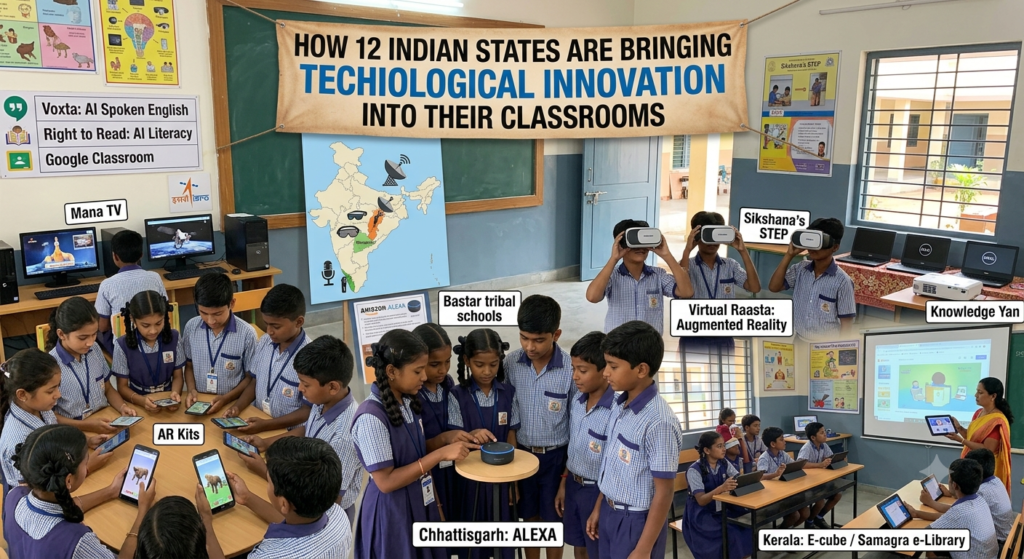
A successful integration of technology in classroom embeds technology with various elements of learning including teaching processes, infrastructure, and inputs. Education technology, can address problems in quality of education by delivering immersive video lessons, introducing interactive inputs, and promoting personalized learning. Given the huge costs that come with large implementation of technology, collaborative programmes and partnerships are key for ensuring this type of integration in Indian classrooms. Several states in India have adopted such interventions to tap into the endless potential of technology – from Augmented Reality kits to interactive apps and videos. Here’s a look at some noteworthy interventions taken by some states:
- Virtual Raasta: Augmented Reality kits which provides an immersive 3D experience for teaching, learning and engages the students with its interactive features. Videos about animals, professions, transport, shapes and instruments are available. The program was launched initially in the Siricilla district.
- Mana TV: Launched in 2016 through a Memorandum of Understanding (MoU) with the Indian Space Research Organization (ISRO). The students would get to watch various educational subject videos in computer labs set up in schools.
- Voxta: It is an app that helps users improve spoken English. Using artificial intelligence and natural language processing, the app gives users instant feedback and corrects how they speak. The company has partnered with a number of vocational institutes to help students speak English better, and is also working with a few low-income schools.
Kerala
- Kerala Infrastructure and Technology for Education: Launched a special initiative by making use of hi-tech lab facilities in schools. The ambitious project is titled E3 (E-cube- Enjoy, Enhance & Enrich). The project has three components. – a Samagra e-Library, an e-Language lab, and an eBroadcast.
Karnataka
- Sikshana’s Tech in Education Programme (STEP): Sikshana Foundation in association with Dell and the Karnataka Government has launched Sikshana’s Technology in Education Program – STEP, in 57 Model Schools – Karnataka Public Schools. This is enabled through the hardware provided by Dell & the offline content package and other inputs developed by Sikshana.
Maharashtra
- Right to Read: In 2014, the Right to Read program was launched in 3 districts of Maharashtra. The initial pilot of this ed-tech project was implemented in partnership with Social Empowerment and Economic Development Society (SEEDS) in 125 schools. Following the established success of the program and basis the feedback received from teachers and administrators, the platform was set for massive scale deployment.
- Google: Maharashtra International Education Board (MIEB) has signed a collaboration agreement with Google for Education in India. MIEB and Google India will collaborate to roll-out free and collaborative Google technologies like Google Classroom, G Suite for Education that drives student-centric learning both online and offline; and encourage collaboration, creativity, and critical thinking.
Orissa
- E-Vidyalaya: In 2014, E-Vidyalaya programme was launched. The Odisha Knowledge Corporation Limited (OKCL) has been preparing e-content in various subjects for the programme for classes VIII and IX.
Chhattisgarh
- Alexa: In Bastar district of Chhattisgarh, 50 primary schools consisting of tribal students use Alexa to address shortages in teachers and promote interactive learning. Bastar has a chronic shortage of teachers because Maoist rebels are active in the region where no outsider wants to come to live and work.
Gujarat
- Senscilen: This company designed 3D interactive videos for students. They have converted most of the lessons in classes 6-8 NCERT Science textbooks to videos.
Arunachal Pradesh
- Knowledge Yan: Introduction of smart classrooms using Knowledge Yan, which is a compact teaching aid. The state government also plans to equip students with tablets and multimedia kits so that they could get all required content in order to interact with the tutors easily. The smart solutions for the teaching aid is also expected to come with an evaluation mechanism that would test the learning ability of the students, through a software developed by the EdCIL (India) Limited, a government of India enterprise. Considering the poor power scenario in the state, the kit is expected to have power backup for 3 to 4 hours.
Assam
- Right to Read: The Right to Read program was launched in Assam, in July 2019 with support from Government of Assam and in partnership with Schoolnet. The program focuses of nearly 400,000 government school students from grades 1-12 across 21 districts. Right to Read aims to deploy AI technology in classrooms. This initiative enables English literacy in schools with the help of multi- sensory reading and comprehension AI software. The AI software is ‘trained’ to read prescribed English textbooks. Teachers are trained in the use of the software in class.
Jharkhand
- Paatham: Paatham is an online e-learning application which consists of blog posts and online discussions. The blog posts include assessment tips, learning guides, discussions on relevant topics, assignment tools, and plenty more. Discussion module helps the students and teachers to interact with each other, resolve doubts, get their queries answered and share their views through posting comments in the discussion board.
Bihar
- PRAYOG (Professionals Alliance for Youths Growth), an NGO based in the Gopalganj district of Bihar is trying to give a high-tech edge to rural education by using informative, animated videos, as teaching tools. Toon Masti is an initiative started by the Ernst & Young Foundation, under which informative, animated videos have been created for the NCERT Curriculum, Class 1 to 5. PRAYOG has implemented a teaching module that combines classroom teaching with Toon Masti’s audio-visual content and also collaborated with Prajnopaya Foundation in an MIT-backed programme called the ‘Global Literacy Project’, which is a self-learning module for pre-primary students with the use of tablets.